
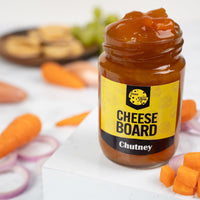


You'll find a jar of it in most British kitchens, usually next to the cheese. It turns up on ploughman's lunches, in cheese sandwiches, and on every self-respecting cheeseboard. But what actually is chutney? What's it made of, where did it come from, and why does the word cover everything from a spoonable fruit preserve to a fresh green paste in an Indian restaurant?
What Is Chutney? A Simple Definition
Chutney is a condiment made from fruit and/or vegetables cooked with vinegar, sugar, and spices until thick and jam-like. It's sweet, tangy, and savoury all at once, and it's used to add flavour to other foods - most famously cheese, cold meats and curries.
That's the short version, but it hides an important complication, the word "chutney" means two rather different things depending on where you are. In Britain, it usually refers to a cooked, preserved condiment sold in jars, the kind you'd spoon onto a cheeseboard. In India, where the word originates, chutney is often a fresh, uncooked paste made and eaten the same day. We'll come back to that distinction, because it's the source of a lot of confusion.
What Is Chutney Made Of?
A British-style chutney is built from four core components:
Fruit and/or vegetables - This is the bulk of the chutney and what gives it its name and character. Common bases include apple, onion, tomato, mango, fig, plum, and marrow. Most chutneys combine several.
Vinegar - Provides the tang and, crucially, acts as a preservative. The acidity is what lets a jar of chutney keep for months or years unopened.
Sugar - Balances the sharpness of the vinegar and helps thicken the mixture. Along with the vinegar, it's part of what preserves the chutney.
Spices - Where the personality comes from. Depending on the style, this might include mustard seed, ginger, chilli, cinnamon, coriander, cumin, or garlic. Warm, sweet spices are typical in British chutneys.
The mixture is simmered slowly - often for an hour or more - until the ingredients break down and the whole thing reduces to a thick, glossy, spoonable consistency. That long, slow cooking is what gives a good chutney its deep, mellow, caramelised flavour.
Where Does Chutney Come From? A Short History
Chutney is old. The concept originates on the Indian subcontinent, where spiced condiments of this kind have been made for well over two thousand years, some food historians trace them back to around 500 BC.
The word itself comes from the Hindi chatni, which derives from a meaning "to lick" or "to taste" - a fitting origin for something designed to make other food more delicious. In its original Indian form, chatni was typically a fresh preparation - fruits, herbs and spices ground together with a mortar and pestle and eaten straight away.
The British connection comes via the colonial era. As Wikipedia records, during the British Raj, Anglo-Indian cuisine adapted Indian chutney and brought it back to Britain, where green mango chutney in particular became popular. The British East India Company began bottling and exporting chutney to Western markets in the late 18th century.
Back in Britain, cooks adapted the idea to local ingredients - apples, onions, plums, and marrows instead of mangoes and tamarind - and leaned into the preserving qualities of vinegar and sugar. This produced the cooked, jarred, longer-lasting style of chutney that Britain now thinks of as its own. It became a natural companion to the great British tradition of cheese, and the pairing stuck.
Indian Chutney vs British Chutney: What's the Difference?
This is the distinction that trips people up, so it's worth being clear about. Both are called "chutney," but they're quite different foods.
| Indian Chutney | British Chutney | |
|---|---|---|
| Preparation | Often fresh, uncooked | Cooked and simmered |
| Shelf life | Eaten same day, fresh | Preserved, keeps for months |
| Texture | Paste or sauce, can be smooth | Thick, chunky, jam-like |
| Typical base | Coriander, mint, coconut, tamarind, tomato | Apple, onion, mango, fig, plum |
| Flavour | Fresh, herby, often hot | Sweet, tangy, mellow, spiced |
| Eaten with | Curries, dosa, samosas, rice | Cheese, cold meats, sandwiches |
Neither is more "authentic" than the other in its own context - the fresh coriander chutney served with a dosa and the jar of caramelised onion chutney on a cheeseboard are both legitimate members of the same broad family, separated by a few centuries and a long sea voyage. When a British recipe or a cheese shop talks about chutney, it almost always means the cooked, preserved kind.
What Does Chutney Taste Like?
A British chutney is a balancing act of three things - sweet (from the sugar and fruit), sour (from the vinegar), and savoury or spiced (from onions, spices, and slow cooking). The best chutneys hold these in balance so that no single element dominates.
Beyond that, the flavour depends entirely on the ingredients. A caramelised onion chutney is deep, sweet, and mellow. A tomato and chilli chutney is tangy with a warm kick. A fig chutney is jammy and luxurious. A mango chutney is fruity and often gently spiced. The texture ranges from smooth to distinctly chunky, depending on how finely the ingredients are chopped and how long they're cooked.
The Main Types of Chutney
A quick tour of the styles you're most likely to meet in Britain:
Caramelised / red onion chutney - Sweet, savoury, and mellow. The most versatile of all and a cheeseboard staple.
Apple and date chutney - Rich, caramelised, and gently spiced - the traditional partner to a ploughman's lunch and mature cheddar.
Mango chutney - Fruity, sweet, and mildly spiced. The one most associated with Indian restaurants in the UK, usually served with poppadoms and curry.
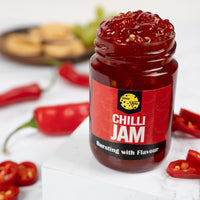
Tomato chutney - Tangy and savoury, sometimes with chilli for heat. Good with cheese and in sandwiches.
Fig and dark fruit chutney - Jammy and sweet, the classic match for blue cheese.
Piccalilli - A bright yellow, mustard-spiced relish of chopped vegetables - technically a cousin of chutney rather than a true chutney, but often grouped with it.
Chutney and cheese - a natural pair: our chutney and jam range is chosen to pair with our cheeses - including a classic apple-and-date Cheeseboard Chutney. If you're wondering which chutney suits which cheese, our guide to what chutney goes with cheese breaks it down by cheese type.
What Do You Eat Chutney With?
In Britain, chutney's most famous partner is cheese. A spoonful of chutney alongside a good cheddar or a slice of Stilton is a fixture of cheeseboards, ploughman's lunches, and cheese sandwiches. The sweetness and acidity cut through the richness of the cheese, which is exactly why the pairing works so well.
But chutney is more versatile than that. It's excellent with:
Cold meats and pork pies (a ploughman's classic), sausage rolls and savoury pastries, burgers and sandwiches in place of ketchup, curries and poppadoms (particularly mango chutney), cheese on toast and toasties, and roast meats like ham and gammon. Some people even stir it into gravies, marinades, and dressings for an instant hit of sweet-sharp depth.
If you're building a cheeseboard, our guides to making a charcuterie board and what to serve with cheese and crackers cover how chutney fits into the wider spread.
Is Chutney Healthy?
Chutney is best thought of as a flavourful accompaniment rather than a health food, and it's eaten in small amounts, which is the sensible way to approach it.
On the positive side, chutney is usually made from fruit and vegetables, and it's typically low in fat. Most British chutneys are naturally vegetarian, and many are vegan - though it's always worth checking the label, as some contain ingredients like honey.
The main thing to be aware of is that chutney is generally high in sugar (and often salt), both of which are essential to its flavour and its keeping qualities. That's not a problem in the small portions chutney is designed for — a teaspoon or two alongside your cheese - but it's not something to eat by the bowlful. As with most condiments, moderation is the whole story.