


Cheese and chutney is one of the great British food partnerships. A good chutney does something no other accompaniment quite manages, it brings sweetness, acidity and spice all at once, which is exactly what rich, fatty cheese needs alongside it.
But walk into any farm shop and you'll find two dozen jars and it's not obvious which goes with what. This guide covers the best chutney for every major cheese type, explains the different chutney styles and gives you the one principle that lets you pair confidently even when you're faced with something unfamiliar.
The Golden Rule - Contrast
If you remember one thing from this guide, make it this - pair by contrast, not similarity. The job of a chutney is to provide what the cheese doesn't have.
Cheese is rich, fatty and often salty. A good chutney cuts through that with acidity and balances it with sweetness. Get that contrast right and both things taste better; get it wrong and one simply buries the other.
In practice this breaks down into two rules of thumb:
Sweet, fruity chutneys go with sharp, salty and strong cheeses. Fig, damson, and quince work brilliantly with blue cheese because the sweetness balances the salt and the funk. This is the same principle behind the classic Stilton and Port pairing.
Tangy, spiced and savoury chutneys go with mild, creamy cheeses. An onion or tomato chilli chutney gives a mild Brie or a young cheddar something to push against. A sweet chutney on a mild cheese just tastes like jam.
There's a third principle worth knowing, and it's the easiest of all - match the region. A French onion chutney with a French Brie, a Somerset apple chutney with a West Country cheddar. Local food traditions have usually done the pairing work already.
Cheese and Chutney Pairing Chart
A quick reference for the most common combinations.
| Cheese | Best Chutney | Why It Works |
|---|---|---|
| Mild cheddar | Caramelised onion, tomato & chilli | Savoury depth gives a young cheese character |
| Mature cheddar | Ale chutney, apple & date, Branston-style | Robust enough to stand up to the sharpness |
| Extra mature / vintage | Ale chutney, spiced apple | Bold flavours that won't be overwhelmed |
| Stilton & blue cheese | Fig, damson, pear & ginger | Sweetness balances salt and funk |
| Brie & Camembert | Cranberry, fig, mango, chilli jam | Fruit or heat cuts through the cream |
| Goat's cheese | Red onion marmalade, beetroot | Sweet-savoury against the tang |
| Cheshire & Wensleydale | Apple chutney, cranberry | Tangy fruit suits crumbly, acidic cheeses |
| Red Leicester | Mild spiced chutney, tomato | Gentle spice complements the nuttiness |
| Smoked cheese | Apple, pear, sweet onion | Sweetness softens the smoke |
| Manchego | Quince | The classic Spanish pairing |
Chutney Pairings by Cheese Type
Cheddar
Cheddar is the most-asked-about pairing, and the answer depends on how mature the cheese is.
For a mild or medium cheddar, go for something with savoury depth: a caramelised onion chutney, or a tomato and chilli. The cheese is gentle enough that the chutney can lead.
For mature and extra mature cheddar, you need a chutney with enough backbone to hold its own. Ale chutney is the classic here. The malty bitterness stands up to a sharp cheddar in a way that a delicate fruit chutney simply can't. Apple and date chutneys work beautifully too, as the caramelised sweetness balances the tang. This is the territory of the traditional ploughman's lunch, and it's hard to improve on.
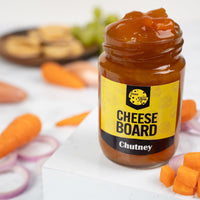
Our Cheeseboard Chutney, which is a rich caramelised chutney made with apples and dates, is built for exactly this pairing. If you're unsure which cheddar strength you're working with, our guide to mild vs mature vs extra mature cheddar explains the differences.
Blue Cheese (Stilton, Roquefort, Gorgonzola)
Blue cheese wants sweetness, and the sweeter and fruitier the better. Fig chutney is the standout as its jammy richness against the salty tang of a Stilton is one of the great pairings. Damson, pear and ginger, and quince all work on the same principle.
The reason is straightforward, blue cheese is intensely salty and savoury and sweetness is the natural counterweight. As Delicious Magazine notes in their cheese and chutney pairing guide, fruity accompaniments pick up on the fruity notes already present in a good blue.
Avoid anything too spicy or vinegary here - blue cheese is assertive enough without a chutney fighting it for attention.
Brie and Camembert
Soft, creamy cheeses give you two good options, and they pull in opposite directions.
The traditional route is fruit - cranberry is the Christmas classic, and fig or mango both work beautifully. The sweetness contrasts the buttery richness.
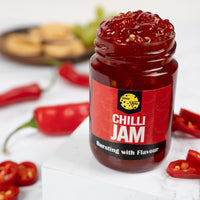
The more interesting route is heat. A chilli jam or a sweet-spicy chutney against a ripe Brie is a genuinely excellent combination. The heat cuts through the cream in a way that fruit alone doesn't. If you've only ever had Brie with cranberry, this is worth trying.
Goat's Cheese
Red onion marmalade is the classic, and for good reason. Goat's cheese has a distinctive lemony tang and a delicate flavour that's easy to overwhelm, so you want something sweet-savoury rather than aggressive. Beetroot chutney is the other natural fit. The earthiness pairs well and the colour looks striking on a board.
Keep it restrained here. With goat's cheese, the classic pairings genuinely are hard to beat.
Crumbly Cheeses (Cheshire, Wensleydale, Lancashire)
These have a lactic, slightly acidic tang and a crumbly texture. Tangy fruit chutneys and apple in particular, complement that acidity rather than fighting it. Cranberry with Wensleydale is a well-established pairing that works on the same logic.
Smoked and Flavoured Cheeses
Smoked cheeses need something sweet to soften the smoke. Apple, pear, and sweet onion chutneys all do this well. Avoid anything smoky or heavily spiced as you'll end up with too much going on.
For flavoured cheeses (truffle, chilli, herb), keep the chutney simple. A cheese that's already doing something interesting doesn't need a complicated partner. A plain caramelised onion is usually the safest bet.
Our chutney and jam range is curated specifically to work with our cheeses, including our Cheeseboard Chutney (apple and date) and Caramelised Onion Chutney. If you'd rather have the pairing done for you, the Cheese & Chutney Gift Box pairs four cheese truckles with both.
The Main Types of Chutney Explained
Understanding the styles makes it much easier to pick well.
Caramelised / red onion. Sweet, savoury, and deeply mellow from slow cooking. The most versatile chutney there is. If you only own one jar, make it this. Works with almost any cheese.
Apple and date. Rich, caramelised, gently spiced. A traditional British style that pairs especially well with cheddar and cold cuts. The backbone of a proper ploughman's.
Ale chutney. Made with beer alongside apples and onions, giving a malty depth and slight bitterness. Built for strong cheddar. One of the few chutneys robust enough for a vintage cheese.
Fig and dark fruit. Jammy, sweet, and luxurious. The go-to for blue cheese, and excellent with soft cheeses too.
Tomato and chilli. Tangy with a warm heat. Cuts through creamy and mild cheeses effectively. Good on a sandwich as well as a board.
Chilli jam. Sweet and hot rather than vinegary. Excellent with Brie, halloumi, and fresh cheeses.
Fruit pastes (quince, damson cheese). Not strictly chutneys, but these are firm, sliceable fruit pastes rather than spoonable preserves. Quince with Manchego is the definitive Spanish pairing and damson paste is superb with hard British cheeses.
Chutney vs Pickle vs Relish - What's the Difference?
These terms get used loosely, and the distinctions genuinely matter when you're choosing.
Chutney is fruit and/or vegetables cooked slowly with vinegar, sugar and spices until thick and jammy. Long cooking is what gives it that mellow, caramelised depth. Texture ranges from chunky to smooth.
Pickle (in the British sense, as in Branston) is chopped vegetables in a sweet, tangy, spiced sauce. Sharper and more vinegary than chutney, with more distinct pieces. Classic in a cheese sandwich.
Relish is generally fresher, less cooked, and chunkier, closer to a condiment than a preserve. Brighter and more acidic, with less of the slow-cooked sweetness.
For a cheeseboard, chutney is usually the best choice because the slow cooking gives it the depth and sweetness that works against rich cheese. Pickle earns its place in a sandwich, where you want that sharper bite against bread and butter.
How to Serve Chutney with Cheese
Use a separate bowl and spoon. Don't spoon chutney directly onto the board, it spreads and it makes everything it touches taste of chutney. A small ramekin with its own spoon keeps things clean and lets people take what they want.
Serve at room temperature. Cold chutney straight from the fridge has muted flavour, the same as cold cheese does. Take both out around 30 minutes before serving.
Two or three chutneys is plenty. More than that and the board gets cluttered and people stop being able to tell them apart. Pick one sweet, one savoury, and if you want a third, something with heat.
Go easy on the amount. Chutney is an accompaniment, not a topping. A small amount alongside the cheese lets you taste both.
Store it properly. Unopened chutney keeps for a long time in the cupboard. Once opened, keep it in the fridge and use within a few weeks. For storing the cheese itself, see our guide to how long cheese lasts in the fridge.
If you're putting together a full spread, our guides to making a charcuterie board and what to serve with cheese and crackers cover the rest of the board.