


A well-made charcuterie board is one of the easiest ways to impress. It takes minutes to assemble, requires zero cooking, and looks impressive. Whether you're hosting a dinner party, planning a picnic, or just putting together something for a quiet evening in, a charcuterie board lets you create something beautiful from simple ingredients.
This guide covers everything you need to know. What to put on a charcuterie board, how to arrange it, how much to buy per person, and the practical tips that turn a decent board into a great one.
What Is a Charcuterie Board?
Traditionally, Charcuterie referred to the craft of curing, smoking, and preserving meats, such as salami, prosciutto, and pâté. In France and Italy, charcuterie has been a respected trade for centuries.
Today, a charcuterie board has evolved into something broader. A sharing platter of cured meats, cheeses, crackers, fruit, pickles, nuts, and condiments, all arranged on a board or slate. Think of it as a cheeseboard's more sociable cousin. There are no strict rules about what goes on one, which is part of the appeal.
You might hear them called grazing boards, sharing platters, or cheese and charcuterie boards - the idea is the same. A generous spread of complementary flavours and textures that people can pick at and enjoy at their own pace.
What to Put on a Charcuterie Board
The best charcuterie boards balance five things: salty, creamy, crunchy, sweet, and sharp.
Cheese
Cheese is the backbone of any charcuterie board. Aim for at least three different types that offer variety in flavour and texture:
A hard cheese. Mature cheddar, Red Leicester, Manchego, or Parmesan. These are firm, sliceable, and packed with flavour. Our cheese wedges come vacuum-sealed in 100g portions, which makes them ideal for boards. You can slice exactly what you need and keep the rest fresh.
A soft cheese. Brie, Camembert, or a creamy goat's cheese. These bring richness and spreadability. A whole round of Brie or Camembert makes a natural centrepiece.
A blue cheese. Stilton, Roquefort, or Gorgonzola. Blue cheese adds a bold, tangy contrast that cuts through the richness of the meats. Even if not everyone loves it, it adds character to the board.
If you're making a larger board, add a fourth - something smoked, flavoured, or unusual. A truffle cheddar or a smoked applewood works brilliantly. Our cheese truckles range includes options like Smoky Oak, Caramelised Onion, and Truffle & Black Pepper that look and taste fantastic on a board.
Cured Meats
Choose two to three meats with different textures and flavours. A good combination might be:
Something delicate: Prosciutto, coppa, or bresaola. Paper-thin, mild, and slightly sweet - these position beautifully on a board.
Something savoury: Salami (soppressata, Milano, or fennel), chorizo, or pepperoni. These bring punch and pair well with strong cheeses.
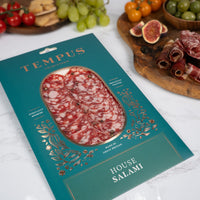
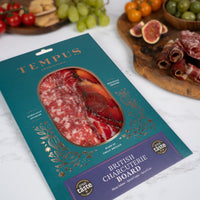
Something British: UK-made charcuterie has come a long way. Look for British salami, venison chorizo, or air-dried ham. Our Tempus Three Meats selection includes smoked coppa, spiced loin, and achari fennel salami - all hand-carved from British-reared pork.
Crackers & Bread
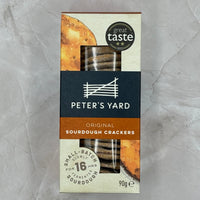
You need something to carry the cheese and meat. A mix of plain and flavoured crackers works well. Sourdough crackers, oatcakes, water biscuits, or seeded flatbreads. Include at least two types. Breadsticks and sliced baguette add variety if you're feeding a crowd. The general rule is to have at least one cracker or piece of bread per slice of meat and cheese on the board.
Accompaniments
This is where you bring the board together. Accompaniments bridge the gap between the cheese and the meat:
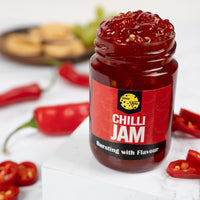
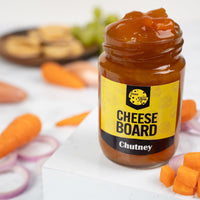
Chutneys and relishes. A caramelised onion chutney, a fruit relish, or a spicy chilli jam. Our cheeseboard chutney is designed specifically to pair with cheese and works beautifully on a charcuterie board too. Serve chutneys in small bowls or ramekins.
Olives and pickles. Marinated olives, cornichons, pickled onions, or sundried tomatoes. These add sharpness and acidity that cuts through the richness of the cheese and meat.
Honey or fig jam. A small drizzle pot of honey is a classic pairing with blue cheese and hard cheeses. Fig jam works equally well.
Fresh Fruit & Dried Fruit
Grapes are the classic. They look great and they work with almost everything. Beyond grapes, consider sliced figs, apple wedges (brushed with a little lemon juice to prevent browning), or pear slices. Dried apricots, dates, and figs add sweetness and hold up well at room temperature.
Nuts
Walnuts, almonds, pecans, and pistachios fill gaps on the board and add crunch. Marcona almonds are particularly good with cured meats and hard cheeses. A handful scattered into the gaps between other items makes the board feel abundant and finished.
How to Make a Charcuterie Board Step by Step
Once you have your ingredients, assembly is straightforward. Here's the method that works every time:
Step 1: Choose your board. A large wooden board, slate, or marble slab works best. Size matters because you want everything to spread out rather than pile up. Our cheeseboards range includes options from slate to acacia wood. A round board works well for smaller gatherings; a long rectangular one suits larger spreads.
Step 2: Place your bowls first. Position two or three small bowls or ramekins on the board for chutneys, olives, and honey. These act as anchor points and create structure. Space them out so they're not clustered in one area.
Step 3: Add the cheese. Place your cheeses on the board next, spaced apart from each other. Cut hard cheeses into slices, wedges, or cubes before placing them. Soft cheeses like Brie or Camembert look best left whole or with a wedge cut out to show the creamy interior. Leave blue cheese in a wedge and crumble one edge slightly.
Step 4: Add the meat. Arrange cured meats in small groupings near the cheeses they pair well with. Fold or roll thin slices like prosciutto, fan out salami, or create salami roses (fold slices over the rim of a wine glass, layer them up, then invert onto the board). Don't flatten everything. Folds and rolls create height and visual interest.
Step 5: Fill in with crackers. Tuck crackers and breadsticks into the gaps between the cheese and meat. Fan them out in rows or stack them in small clusters. It's fine for crackers to overlap the edge of the board.
Step 6: Add fruit, nuts, and finishing touches. Scatter grapes in small bunches, tuck dried apricots into corners, and fill any remaining gaps with nuts. Add a sprig of rosemary or thyme if you want a rustic, polished look. The goal at this stage is abundance. You want the board to look full without being cluttered.
Step 7: Fill the bowls. Add your chutneys, olives, and honey to the bowls you placed earlier. Provide small spoons or forks alongside them.
Step 8: Provide utensils and plates. Set out cheese knives, small forks, and a stack of side plates or napkins. This keeps things hygienic and makes it easy for guests to serve themselves.
How Much Do You Need? Portions Per Person
Getting the quantities right means nobody goes hungry and you're not drowning in leftovers.
For a charcuterie board served as a starter or appetiser, plan for roughly 50–75g of cheese and 50g of cured meat per person, plus a generous handful of crackers and accompaniments. For a board that's the main event (a grazing dinner, a picnic, or a long evening), double those amounts.
As a rough guide, a board for 4 people needs around 200–300g of cheese (3–4 varieties), 200g of cured meats (2–3 types), a couple of packs of crackers, and 2–3 accompaniments. For 8 people, scale up to 500–600g of cheese, 400g of meat, and more of everything else.
If you'd rather have everything arrive in one box, our Charcuterie Selection Box includes three British cured meats, a vintage cheddar truckle, crackers, chutney, cheese bakes, and olives, enough for 2 - 4 people and ready to arrange straight onto a board. For a bigger gathering, the Charcuterie Gourmet Hamper has everything you need for a full spread.
Charcuterie Board Ideas
Once you've covered the basics, you can theme your board for different occasions and tastes.
The Classic British Board. Mature cheddar, Red Leicester, and Stilton. British salami and air-dried coppa. Branston-style chutney, pickled onions, apple wedges, and oatcakes. Simple, crowd-pleasing, and unapologetically British.
The Italian Board. Parmesan, mozzarella, and Gorgonzola. Prosciutto, Milano salami, and 'nduja. Sundried tomatoes, marinated olives, grissini, focaccia, and a drizzle of balsamic glaze. Pair it with a decent Chianti.
The Vegetarian Board. Drop the meat entirely and go big on the cheese. Brie, aged Gouda, a strong blue, and a smoked cheddar. Fill the space with marinated artichokes, roasted peppers, hummus, stuffed vine leaves, honeycomb, and a variety of breads and crackers.
The Mini Date Night Board. A smaller, more intimate version. One or two cheeses, one cured meat, a small pot of honey, a handful of grapes, and some good crackers. Our Charcuterie Gift Pack is sized perfectly for two.
The Crowd-Pleaser for Parties. 5 - 6 cheeses, 3 - 4 meats, multiple bowls of accompaniments, and plenty of bread and crackers. Use the biggest board you have (or line a table with baking paper and build the spread directly on it). Our Grazing Charcuterie & Cheese Box gives you a solid foundation to build from.
Charcuterie Board Tips
Bring everything to room temperature. Take cheese and charcuterie out of the fridge 30 - 60 minutes before serving. Cold cheese has muted flavour; room temperature cheese tastes significantly better. This is one of the simplest things you can do to improve your board.
Don't leave the board out too long. Standard food safety guidance recommends that perishable foods (cheese, cured meats, cut fruit) shouldn't sit at room temperature for more than two hours. If you're hosting a longer event, put out a smaller board and replenish it from the fridge as needed.
Cut the cheese before it goes on the board. People are oddly reluctant to be the first person to cut into a whole block of cheese. Pre-slice or pre-cut everything so guests can just pick up a piece. Wedges for soft cheese, cubes or slices for hard cheese, crumbled edges for blue.
Think in odd numbers. Three cheeses, three meats, three accompaniments. The "3-3-3 rule" is a popular framework for a reason - it creates balance without overcomplicating things. You can scale to 5-5-5 for larger boards.
Contrast colours and textures. A board that's all beige doesn't look inviting. Use the deep purple of grapes, the green of olives, the orange of dried apricots, and the rich amber of chutney to break things up. Mix smooth (Brie) with crumbly (Stilton), floppy (prosciutto) with firm (salami).
Label if you want to be helpful. Small handwritten tags or food picks help guests navigate what's what, especially if you're serving anything unusual or if guests might have dietary considerations.
Pair with drinks. A dry white or light red wine is the classic pairing. Craft beer (a pale ale with salami, a porter with strong cheddar) works brilliantly too. For a non-alcoholic option, sparkling elderflower or a botanical tonic water pairs well with the savoury-sweet balance of the board.