


Few things are as satisfyingly British as a ploughman’s lunch. A wedge of good cheddar, a hunk of crusty bread, a spoonful of chutney, a pickled onion or two, and something cold and crisp on the side. It’s the definitive pub lunch, a staple of country walks, and one of the easiest meals there is to put together at home.
This guide covers what goes into a proper ploughman’s, how to put one together, how to turn it into a sandwich or a sharing platter, and the surprisingly modern story behind its name.
What Is a Ploughman’s Lunch?
A ploughman’s lunch is a cold British meal built around cheese, bread and pickle. The essentials are a generous piece of hard cheese (traditionally cheddar), crusty bread with butter, and something sharp like chutney or pickled onions. Most modern versions add extras such as ham, a pork pie, a Scotch egg, apple, celery and salad leaves.
It’s served cold, needs no cooking, and is traditionally eaten with a pint of beer or cider. Think of it as Britain’s answer to a charcuterie board, just simpler and heartier.
What’s in a Ploughman’s? The Classic Components
| Component | Traditional choice | Why it’s there |
|---|---|---|
| Cheese | Mature or vintage cheddar; Stilton or Cheshire as extras | The heart of the meal |
| Bread | Crusty white or granary loaf, with butter | Something hearty to carry it all |
| Chutney or pickle | Apple chutney, Branston-style pickle | Sweet, tangy contrast to the cheese |
| Pickled onions | Sharp, crunchy pickled onions | Cuts through the richness |
| Cold meat | Ham, pork pie, Scotch egg | Makes it a proper meal |
| Fruit and veg | Apple, celery, salad leaves, tomato | Freshness and crunch |
The Cheese
Cheese is the one non-negotiable. A mature or vintage cheddar is the classic: firm enough to cut into a proper wedge, with enough flavour to stand up to pickle and onion. A Vintage Cheddar wedge or a Vintage Cheddar waxed truckle is ideal. If you’re not sure which strength to go for, our guide to mild vs mature vs extra mature cheddar explains the difference.
For a more generous plate, add a second cheese: Stilton for something bold, or a crumbly Cheshire or Wensleydale for something lighter. A flavoured cheddar from our cheese wedge range, such as Cracked Black Pepper, adds interest without straying far from tradition.
The Bread
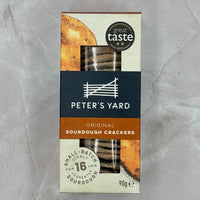
Proper crusty bread, thickly sliced, with real butter. A white bloomer, a granary loaf or a sourdough all work. This isn’t the place for thin sliced bread. If you’re short on bread, a few sourdough crackers make a good stand-in.
The Pickle and Chutney
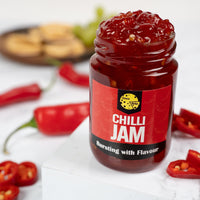
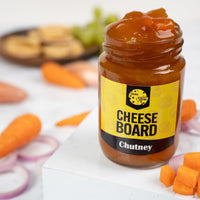
This is what gives a ploughman’s its character. A dark, sweet-sharp chutney is traditional, and apple-based chutneys are a natural fit. Our Cheeseboard Chutney, made with apples and dates, was made for exactly this plate, and a Caramelised Onion Chutney is an easy alternative. For more on pairings, see our guide to what chutney goes with cheese.
A spoonful of piccalilli is another favourite, particularly with ham, thanks to its mustardy tang. Our guide to what piccalilli is explains why it works so well.
The Pickled Onions
Sharp, vinegary pickled onions are a ploughman’s staple. They cut through the richness of the cheese and butter and add a satisfying crunch. Pickled shallots or cornichons work as alternatives.
The Extras
The modern ploughman’s usually includes a few of these: ham (thick-cut is best), a wedge of pork pie, a Scotch egg, slices of apple, sticks of celery (the classic partner for Stilton), a few salad leaves and tomato. Some pubs add a hard-boiled egg or a little coleslaw.
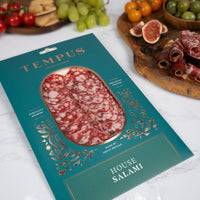
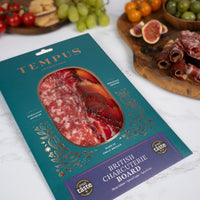
Cured meats are a nice modern twist. A few slices of British salami or coppa from our charcuterie range add variety without much effort. If you’re new to them, our guide to what charcuterie is explains the main types.
How to Make the Perfect Ploughman’s Lunch
1. Take the cheese out early. Give it 30 minutes out of the fridge. Room-temperature cheese tastes noticeably better.
2. Cut the cheese generously. A ploughman’s is not the place for dainty slices. Cut a proper wedge, around 50 to 75g per person for a main meal.
3. Slice the bread thickly and serve it with plenty of butter, either on the side or already spread.
4. Add the sharp things. A good spoonful of chutney, two or three pickled onions, and piccalilli if you like it. Small ramekins keep everything tidy on a board.
5. Add the meat and extras. A couple of slices of ham, a wedge of pork pie or half a Scotch egg.
6. Finish with something fresh. Apple slices (brushed with a little lemon juice to stop them browning), celery sticks and a handful of salad leaves.
7. Serve on a board or plate, with a pint alongside.
The key to a good ploughman’s is balance: rich (cheese, butter, pork pie), sharp (pickle, onion, piccalilli) and fresh (apple, celery, leaves). Get one of each and it always works.
A ploughman’s kit in one box: Our Cheese Lovers Gift Selection pairs three waxed cheese truckles with three chutneys and crackers, which covers the core of a ploughman’s for a few people. Add some bread, pickled onions and ham and you’re done.
The Ploughman’s Platter (for Sharing)
A ploughman’s scales up beautifully into a sharing board for a garden lunch, a picnic or a family gathering. Use a large wooden board, put out two or three cheeses, a whole pork pie, a pile of ham, bowls of chutney, piccalilli and pickled onions, a sliced loaf, and plenty of apple and celery. Let everyone build their own plate.
It’s essentially a British version of a charcuterie board. For styling tips, see our step-by-step guide to making a charcuterie board. A ploughman’s platter also makes a brilliant centrepiece for a Boxing Day buffet.
How to Make a Ploughman’s Sandwich
The ploughman’s sandwich takes the same flavours and puts them between two slices of bread, and it’s one of the great British sandwich fillings.
What you need: thick slices of crusty or granary bread, butter, mature cheddar, a good spoonful of chutney or pickle, and something crunchy and fresh, such as lettuce, sliced tomato or thin rings of red onion. Ham is optional but popular.
How to build it: butter both slices right to the edges (it stops the chutney soaking in), spread the chutney on one side, add a generous layer of thickly sliced cheddar, then the salad and ham. Press down gently, cut in half, and eat. If you’re making it ahead, keep tomato and lettuce separate until you’re ready to eat so the bread doesn’t go soggy.
What to Drink With a Ploughman’s
A ploughman’s is a pub lunch at heart, so beer is the traditional partner. A bitter or a pale ale is the classic choice, and a crisp cider works brilliantly with the apple and cheddar flavours. If you’d rather have wine, a medium-bodied red or a dry white suits the cheese; our wine and cheese pairing guide has more detail.
For the full pub experience at home, our Pub in a Box brings together beer, cheese and snacks.
Where Does the Ploughman’s Lunch Come From?
Bread, cheese and beer have been eaten by British farm workers for centuries, but the name ‘ploughman’s lunch’ is more modern than most people assume.
The Oxford English Dictionary records the phrase ‘ploughman’s luncheon’ as early as 1837, in John Gibson Lockhart’s Memoirs of the Life of Sir Walter Scott, but there it simply described a ploughman’s meal rather than a named dish. The term as we know it took off after the Second World War. Cheese had been rationed until 1954, and sales needed a boost, so a marketing body called the Cheese Bureau began promoting bread, cheese and pickle in pubs in the mid-1950s. Through the 1960s, the Milk Marketing Board pushed ‘the ploughman’s lunch’ nationally, and pubs across the country adopted it.
So while the meal itself has deep roots in rural Britain, the name and the idea of a ‘traditional ploughman’s’ on a pub menu owe a lot to post-war cheese marketing. It’s a good story, and it hasn’t done the cheese industry any harm since.
Frequently Asked Questions
What is in a ploughman’s lunch?
A traditional ploughman’s lunch contains a piece of hard cheese (usually cheddar), crusty bread and butter, chutney or pickle, and pickled onions. Many versions also include ham, pork pie or a Scotch egg, apple, celery and salad.
What cheese is best for a ploughman’s?
A mature or vintage cheddar is the classic choice, as it’s firm enough to cut into a wedge and strong enough to stand up to pickles. Stilton, Cheshire and Wensleydale are popular additions for a more generous plate.
Why is it called a ploughman’s lunch?
The name refers to the simple bread-and-cheese meal farm workers took into the fields. Although the phrase appears in print as early as 1837, it was popularised in the 1950s and 1960s by cheese marketing campaigns, first by the Cheese Bureau and then nationally by the Milk Marketing Board.
Is a ploughman’s lunch served hot or cold?
Cold. Everything on a ploughman’s is served cold or at room temperature, which is part of what makes it so easy to prepare.
What chutney goes in a ploughman’s?
A sweet, tangy chutney such as apple and date, caramelised onion or a Branston-style pickle is traditional. Piccalilli is also popular, especially alongside ham.
What do you drink with a ploughman’s lunch?
Traditionally beer, particularly a bitter or pale ale, or a crisp cider. Apple juice or a sparkling elderflower works well as a non-alcoholic option.
How much cheese do you need for a ploughman’s?
Around 50 to 75g of cheese per person makes a satisfying main meal. For a lighter lunch, or if you’re including plenty of meat and extras, 40 to 50g is enough.