



Charcuterie has gone from a specialist French term to a word on every restaurant menu and dinner-party table. But if you've ever wondered what it actually means, how it differs from a plain plate of cold meat, or what the difference is between prosciutto and coppa, you're in the right place.
This guide explains what charcuterie is, where the word comes from, how cured meats are made, and walks through the main types one by one so you can shop and serve with confidence.
What Is Charcuterie? A Simple Definition
Charcuterie refers to prepared meat products, mostly pork, that have been preserved through curing, smoking, salting, or drying. The term covers cured meats like salami, prosciutto, and coppa, as well as preparations like pâté, rillettes, and terrines.
In everyday modern use, "charcuterie" usually means the selection of cured meats you'd serve on a sharing board - the salami, ham, and chorizo that sit alongside cheese, crackers, and chutney. Strictly speaking it's the craft of preserving meat, but in practice most people use it to mean the meats themselves.
The key thing that unites all charcuterie is preservation. Before refrigeration, curing and drying meat was the only way to make it last. What began as a practical necessity became a genuine craft, and the results - concentrated, complex, deeply savoury - are now prized in their own right.
What Does Charcuterie Mean Literally? (Origins)
The word is French, from chair (flesh) and cuit (cooked) - literally "cooked flesh." It dates back to 15th-century France, where a charcutier was a shopkeeper licensed to prepare and sell pork products. Charcuterie shops were a fixture of French towns, each specialising in sausages, hams, pâtés, and other preserved meats.
As Britannica notes, charcuterie as a craft is centuries old, though the practice of curing and preserving meat stretches back much further, the Romans were making cured hams and sausages two thousand years ago. Today the word has spread well beyond France to describe cured meats from Italy, Spain, and increasingly Britain, but the French root remains.
How Are Cured Meats Made?
Most charcuterie is made through one or more of these preservation methods:
Salt-curing. The foundation of nearly all charcuterie. Salt draws moisture out of the meat and creates an environment where harmful bacteria can't survive. This is how prosciutto and other whole-muscle hams are made - salted, then hung to air-dry.
Air-drying. After salting, many meats are hung in cool, controlled conditions for weeks or months. As moisture evaporates, the flavour concentrates and the texture firms up. Prosciutto, bresaola, and coppa are all air-dried.
Fermenting. Salami and other dry sausages are made by mixing minced meat with salt and cultures, packing it into casings, and letting it ferment and dry. The fermentation develops the characteristic tang and helps preserve the meat.
Smoking. Some charcuterie is smoked, either for flavour or as an additional preservation step. Smoked hams and some chorizos fall into this category.
The common thread is that the meat is preserved and transformed without conventional cooking which is why cured meats can be eaten straight from the pack, sliced thin, at room temperature.
The Main Types of Charcuterie Explained
Here are the cured meats you're most likely to meet, and what makes each one distinct.
Prosciutto
The most famous cured meat of all. Prosciutto is an Italian dry-cured ham, made from a whole pork leg that's salted and air-dried for months (sometimes years). The best-known is Prosciutto di Parma. It's sliced paper-thin, has a delicate, sweet-savoury flavour, and practically melts on the tongue. Prosciutto is the elegant, mild option on any board - wonderful draped over melon, wrapped around breadsticks, or simply eaten as is.
Salami
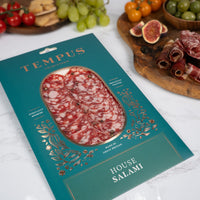
The catch-all name for cured, fermented, dried sausages. There are countless varieties - Milano (fine-textured and mild), Napoli (coarser and spicier), fennel salami (finocchiona), and many more. Salami is made from minced pork (sometimes beef) mixed with fat, salt, and seasonings, then fermented and dried. It's the savoury, punchy backbone of most charcuterie boards, and it pairs especially well with strong cheeses.
Coppa
Also called capocollo, coppa is a whole-muscle cured meat made from the pork neck and shoulder. It sits somewhere between prosciutto and salami - richer and more marbled than prosciutto, with a deep, savoury flavour and a beautiful ribbon of fat running through each slice. Often seasoned with pepper or fennel. A favourite among charcuterie enthusiasts for its balance of meat and fat.
Bresaola
The elegant outlier: bresaola is made from beef, not pork. It's air-dried lean beef, deep red in colour, with a clean, savoury, slightly tangy flavour and almost no fat. Because it's so lean, it's often considered the lighter, healthier choice on a board. Traditionally from the Lombardy region of Italy, it's lovely dressed simply with lemon, olive oil, and rocket.
Chorizo
The Spanish contribution, and instantly recognisable by its deep red colour and paprika-spiced flavour. Cured chorizo (the kind you slice and eat without cooking, as opposed to fresh cooking chorizo) is firm, richly spiced, and adds a warm, smoky kick to a board. It brings colour and heat that contrasts nicely with milder meats and creamy cheeses.
Other Charcuterie (Pâté, Rillettes, 'Nduja)
Charcuterie extends beyond sliced meats. Pâté is a smooth or coarse spread made from cooked, seasoned meat (often liver). Rillettes are meat slow-cooked in fat until it shreds, then packed into a pot — rich and spreadable. 'Nduja is a soft, spicy, spreadable Calabrian salami that's having a real moment. These add variety and a spreadable element to a board alongside the sliced meats.
| Meat | Origin | Made From | Flavour |
|---|---|---|---|
| Prosciutto | Italy | Pork leg (whole muscle) | Delicate, sweet, mild |
| Salami | Italy | Minced pork, fermented | Savoury, punchy |
| Coppa | Italy | Pork neck/shoulder | Rich, marbled, deep |
| Bresaola | Italy | Beef (whole muscle) | Lean, clean, tangy |
| Chorizo | Spain | Pork, paprika-spiced | Smoky, warm, spiced |
| 'Nduja | Italy | Soft spreadable salami | Spicy, rich |
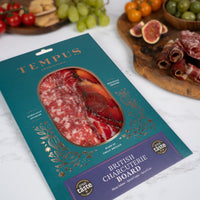
Try a curated selection: our charcuterie range features British-made cured meats, and the Tempus Three Meats selection is a great way to try smoked coppa, spiced loin, and fennel salami together — all hand-carved from British-reared pork.
British Charcuterie
Charcuterie may be French and Italian by tradition, but British producers have made remarkable strides in the last decade or two. UK charcuterie now stands genuinely alongside Continental options, made using traditional methods but with British-reared meat and often a distinctly British character.
Look out for British salami, air-dried ham, venison and wild boar charcuterie, and paprika-spiced British chorizo. Producers like Tempus and Cannon & Cannon have built strong reputations. Choosing British charcuterie means fresher provenance, lower food miles, and supporting a young but thriving craft industry and the quality genuinely holds its own.
How to Serve Charcuterie
Charcuterie is at its best as part of a sharing board with cheese and accompaniments. A few principles:
Serve at room temperature. Take cured meats out of the fridge 20–30 minutes before serving. Cold meat straight from the pack has muted flavour and a firmer texture; at room temperature the fat softens and the flavour opens up.
Choose two or three meats with variety. A good combination has different textures and intensities - something delicate (prosciutto), something punchy (salami), and something with character (coppa or chorizo).
Fold, don't flatten. Fold or loosely ruffle thin slices rather than laying them flat, and fan out salami. This adds height and makes the board look generous. Salami roses (slices layered over a glass rim, then inverted) are an easy showstopper.
Pair with the right partners. Cured meats love cheese, chutney, cornichons, olives, crusty bread, and crackers. For the full spread, see our guides to making a charcuterie board and what to have with cheese and crackers.
Add a drink. A medium-bodied red, a dry white, or a crisp lager all work. Our wine and cheese pairing guide covers the principles, which apply to charcuterie too.
How to Store Cured Meats
Because charcuterie is preserved, it keeps well but it still needs looking after.
Unopened, most vacuum-packed cured meats keep for weeks or months in the fridge, right up to the date on the pack. Once opened, wrap the meat in wax or greaseproof paper (not cling film directly, which can make it sweat) and use within a few days to a week. Whole, unsliced salami and chorizo last longer than pre-sliced meat and can even be kept hung in a cool place. If in doubt, check the packaging and the same room-temperature-serving rule applies right up until you finish the pack. For storing the cheese alongside it, see our guide to how long cheese lasts in the fridge.
Is Charcuterie Healthy?
Charcuterie is best enjoyed as an occasional treat rather than an everyday food. On the plus side, cured meats are high in protein and, in the case of lean options like bresaola, relatively low in fat.
However, charcuterie is a processed meat, and it's generally high in salt (salt is central to how it's preserved) and, for the fattier cuts, high in saturated fat. Health guidance recommends limiting processed meat, so charcuterie is a food to enjoy in moderation — a few slices as part of a shared board, rather than in large quantities. As with most rich, savoury pleasures, the sensible approach is quality over quantity: a little good charcuterie, enjoyed properly.