


Salami is one of the most familiar cured meats in the world. It’s the backbone of most charcuterie boards, a staple of Italian delis, and the thing most people reach for first when they think ‘cured meat’. But what actually is it, how is it made without being cooked, and what’s the difference between salami and pepperoni?
This guide answers all of that, along with the main types of salami, how to serve it, and how to store it once it’s open.
What Is Salami?
Salami is a cured, fermented and air-dried sausage, usually made from pork. Minced meat and fat are mixed with salt and seasonings, packed into a casing, then left to ferment and dry for anywhere from a few weeks to several months. The result is a firm, savoury sausage that’s ready to eat without cooking and keeps for a long time.
The name comes from the Italian salame, which traces back to sale, the Italian word for salt, a reminder that salt is what makes the whole process work. Italy is the spiritual home of salami, but almost every European country has its own version, from French saucisson to Spanish chorizo, and Britain now produces some excellent salami of its own.
Salami is one of several types of charcuterie. For the bigger picture, including prosciutto, coppa and bresaola, see our guide to what charcuterie is.
What Is Salami Made Of?
Traditional salami has a short list of ingredients:
Meat. Usually pork, often from the shoulder, minced to a coarse or fine grain depending on the style.
Fat. Pork fat, cut into small pieces, gives salami its rich flavour and the distinctive white flecks you see when it’s sliced.
Salt. The key preserving ingredient. It draws out moisture and makes the meat inhospitable to harmful bacteria.
Curing salts. Most commercial salami includes a small amount of nitrite or nitrate, which helps prevent harmful bacteria (including the bacteria that cause botulism) and gives salami its characteristic deep red colour.
Seasonings. Black pepper, garlic, fennel seed, chilli, paprika and wine are all common. These are what give different salamis their personality.
Starter cultures. Beneficial bacteria, similar to those used in cheesemaking, that kick off the fermentation.
A casing. Traditionally natural animal intestine, though many modern salamis use collagen or synthetic casings.
How Is Salami Made?
The process is a lot like cheesemaking: it relies on salt, fermentation and time rather than heat.
1. Mixing. The meat and fat are minced, then mixed with salt, curing salts, seasonings and starter cultures.
2. Stuffing. The mixture is packed tightly into casings and tied off.
3. Fermenting. The salami is kept somewhere warm and humid for a few days. The cultures convert sugars into lactic acid, which lowers the pH, gives salami its gentle tang, and makes it much harder for harmful bacteria to survive.
4. Drying. The salami is then hung in cool, humid, carefully controlled conditions to dry slowly. Over weeks or months it loses a large proportion of its weight as water, which concentrates the flavour and firms the texture.
That powdery white coating on the outside of many salamis is a harmless, food-safe mould that’s deliberately encouraged during drying. It helps regulate moisture and protects the salami. You don’t eat it; it comes off with the casing.
Is Salami Raw?
Salami isn’t cooked, but it isn’t raw in the usual sense either. It’s cured: the combination of salt, curing salts, fermentation and drying makes it safe and ready to eat straight from the packet. That’s the whole point of curing, and it’s why salami can be sliced and eaten cold.
Some salami-style products, like pepperoni on a pizza, are often cooked too, but that’s for flavour and texture rather than safety. Always follow the label: commercially produced salami sold as ready to eat doesn’t need cooking.
Is Salami Pork?
Most salami is made from pork, and in the UK and Europe that’s the default. But it isn’t always. Beef salami is widely available, including halal and kosher versions, and you’ll also find salami made from venison, wild boar, lamb, turkey and even duck. If you need to avoid pork for dietary or religious reasons, check the ingredients carefully, as some ‘beef’ salamis use pork fat or casings.
Salami vs Pepperoni: What’s the Difference?
Pepperoni is actually a type of salami, so the real question is what makes pepperoni different from other salamis.
| Salami | Pepperoni | |
|---|---|---|
| Origin | Italy and across Europe | Italian-American |
| Meat | Usually pork; many varieties | Usually pork and beef |
| Texture | Coarse to fine grain, varies by type | Fine grain, smooth and firm |
| Flavour | Varies widely: garlic, fennel, pepper, wine | Smoky, spicy, paprika and chilli |
| Typically eaten | Sliced cold on boards and in sandwiches | Cooked on pizza, where it crisps and curls |
| Diameter | Often wider | Usually narrow |
In short: all pepperoni is salami, but not all salami is pepperoni. Pepperoni is a specific, spicy, fine-textured style designed to be cooked, whereas most salami is made to be enjoyed cold.
The Main Types of Salami
There are hundreds of regional salamis. These are the ones you’re most likely to come across:
Milano. Fine-grained, mild and slightly sweet, with garlic and white pepper. One of the most popular and widely available.
Napoli. Coarser, darker and spicier, often with chilli and black pepper.
Finocchiona (fennel salami). A Tuscan salami flavoured with fennel seeds, which give it a sweet, aromatic, slightly aniseed note.
Felino. A long, thin salami from near Parma, mild and delicate, often considered one of Italy’s finest.
Soppressata. A rustic, coarsely ground salami from southern Italy, often pressed into a slightly flattened shape, sometimes spicy.
Saucisson sec. France’s dry-cured sausage: simple, garlicky and usually smaller than Italian salami.
Chorizo. Spain’s paprika-spiced cured sausage, deep red and smoky. Technically its own category, but a close cousin.
‘Nduja. A soft, spicy, spreadable salami from Calabria, used more like a paste than a slicing salami.
British Salami
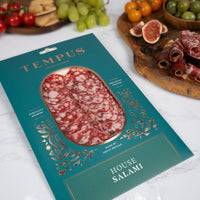
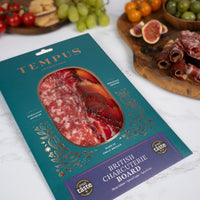
British producers have made huge strides in cured meats, and British salami now holds its own against Continental versions. Our Tempus House Salami is made from British-reared pork, and the Tempus Three Meats selection includes a fennel salami alongside smoked coppa and spiced loin, a good way to taste the difference between styles.
Try British salami: Browse our full charcuterie range, or pick up a Charcuterie Selection Box for a ready-made combination of British cured meats, cheese and accompaniments.
How to Serve Salami
Bring it to room temperature. Take salami out of the fridge 20 to 30 minutes before serving. Cold salami tastes muted and the fat feels waxy; at room temperature the flavour opens up.
Remove the casing. For most salami, peel the casing off before slicing, unless the label says it’s edible.
Slice it thinly. Thin slices, cut on a slight diagonal, have the best texture. Thicker chunks suit a rustic board or a picnic.
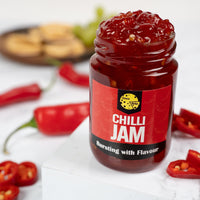
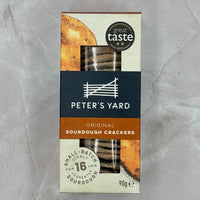
Pair it well. Salami loves bold cheese (a mature cheddar is a natural match), sharp pickles, chutney, olives, crusty bread and crackers. Our Chilli Jam is especially good with it. For ideas, see our step-by-step guide to making a charcuterie board, or the classic British plate in our ploughman’s lunch guide.
Make salami roses. Fold slices over the rim of a glass in overlapping layers, then turn the glass out onto the board. It looks impressive and takes about a minute.
Drinks. A medium-bodied red such as Chianti or Rioja, a crisp lager or a dry cider all work well. Our wine and cheese pairing guide covers the same principles.
How to Store Salami
Unopened, vacuum-packed salami keeps in the fridge until the date on the pack. A whole, uncut stick of dry salami is very stable and can often be kept somewhere cool and dry, but always follow the producer’s storage instructions.
Once opened or sliced, wrap salami in wax or greaseproof paper (cling film can make it sweat), keep it in the fridge, and eat sliced salami within a few days to a week. A whole stick that’s been cut keeps longer than pre-sliced salami; just wrap the cut end. A little white mould on the casing is normal, but discard salami that smells sour, feels slimy, or shows fuzzy coloured mould on the meat itself.
Is Salami Healthy?
Salami is high in protein, but it’s also a processed meat that’s high in salt and saturated fat. The NHS advises that people who eat more than 90g of red and processed meat a day should cut down to around 70g. So salami is best enjoyed as a treat: a few slices on a board, rather than every day.
Pregnancy: the NHS advises caution with cold cured meats such as salami during pregnancy, because they’re cured rather than cooked. If you’re pregnant, check the current NHS guidance on foods to avoid in pregnancy for the latest advice on how to eat them safely.
Frequently Asked Questions
What is salami made of?
Salami is made from minced meat (usually pork), pork fat, salt, curing salts, seasonings such as garlic, pepper or fennel, and starter cultures, all packed into a casing. It’s then fermented and air-dried rather than cooked.
Is salami raw meat?
Salami isn’t cooked, but it is cured: salt, curing salts, fermentation and drying make it safe and ready to eat. Ready-to-eat salami doesn’t need cooking.
Is salami pork?
Most salami is pork, but beef, venison, wild boar, turkey and other meats are also used. Check the ingredients if you need to avoid pork, as some beef salamis contain pork fat or casings.
What is the difference between salami and pepperoni?
Pepperoni is a type of salami: an Italian-American style that’s finer, smokier and spicier, usually made from pork and beef and designed to be cooked on pizza. Salami is the broader family, and most varieties are eaten cold.
Do you eat the skin on salami?
Usually not. Most salami casings, especially those with a white mould coating, should be peeled off before slicing. Some thin natural casings are edible, but if in doubt, remove it.
How long does salami last once opened?
Sliced salami should be eaten within a few days to a week of opening and kept wrapped in the fridge. A whole stick lasts longer once cut; wrap the cut end and follow the producer’s guidance.
What is the white stuff on salami?
The white powdery coating is a harmless, food-safe mould encouraged during drying to protect the salami and regulate moisture. It comes off with the casing.