



A charcuterie board is one of the easiest ways to feed a crowd at Christmas. There’s no cooking, it can be assembled hours ahead, and with a few festive touches it looks spectacular on the table. Whether it’s for a Christmas Eve drinks party, a pre-dinner nibble on the big day or a Boxing Day graze, a good board does a lot of work for very little effort.
This guide focuses on the meat side of things: which cured meats to choose, the festive accompaniments that make it Christmassy, and how to shape the board into a Christmas tree or a wreath. If you’re after a cheese-led board, our guide to the perfect Christmas cheese board has you covered.
What Makes a Charcuterie Board Christmassy?
Three things turn a regular charcuterie board into a Christmas one: festive flavours (cranberry, fig, clementine, spice), colour (deep reds and greens from cured meats, rosemary, pomegranate and cranberries), and shape. The Christmas tree and the wreath are the two shapes that really make a board look seasonal, and both are much easier to pull off than they look.
The Best Meats for a Christmas Charcuterie Board
Choose three or four meats with different textures and strengths. A good festive combination:
Prosciutto or air-dried ham. Delicate and sweet, and it folds or ruffles beautifully, which matters for festive shapes. It’s the meat you’ll use to create the ‘garland’ on a tree board.
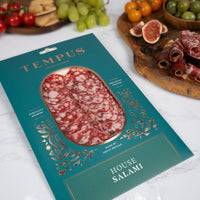
Salami. The savoury backbone of the board. Slices can be fanned out, folded into quarters, or turned into salami roses. Our Tempus House Salami is made from British pork.
Coppa. Richer and more marbled than prosciutto, with a deep savoury flavour. It adds a darker red to the colour palette.
Chorizo. Paprika-spiced and vivid red, it brings warmth and colour that contrasts well with paler meats.
Something festive. Thin slices of cold glazed ham, or a pot of chicken liver pâté, make the board feel distinctly Christmassy. Warm pigs in blankets on a small plate alongside the board always disappear first.
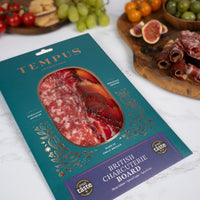
The Tempus Three Meats selection covers smoked coppa, spiced loin and fennel salami in one pack, which takes care of most of the meat for a smaller board. For more on the differences between them, see our guide to what charcuterie is.
Festive Accompaniments
This is where the Christmas character really comes from.
Cranberry sauce or cranberry chutney. The obvious festive pairing, and brilliant with ham and turkey.
Chilli jam. Sweet heat that works with every cured meat on the board. Our Chilli Jam is a favourite with salami and chorizo.
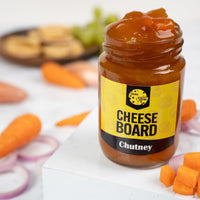
Chutney. A Caramelised Onion Chutney or our Sundried Tomato & Smoked Garlic Chutney adds depth. For more pairing ideas, see what chutney goes with cheese.
Piccalilli and cornichons. Sharp, crunchy and very British, they cut through the fat in the meats.
Festive fruit. Fresh figs, pomegranate seeds, clementine segments, grapes and dried apricots add sweetness and colour.
Nuts. Candied pecans, walnuts or Marcona almonds fill the gaps and add crunch.
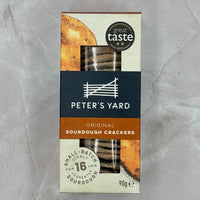
Crackers and bread. A mix of sourdough crackers, breadsticks and sliced baguette. Breadsticks wrapped in prosciutto are a nice touch.
A Little Cheese
On a charcuterie board, cheese plays a supporting role rather than the lead. One or two cheeses are plenty: a mature cheddar and something soft like Brie work well. Our cheese wedges are a convenient size for this, and a waxed truckle cut into wedges looks very festive. If you want the cheese to be the main event, switch to our Christmas cheese board guide instead.
How to Make a Christmas Tree Charcuterie Board
The Christmas tree board is the one people photograph. You’ll need a large rectangular or triangular board.
1. Mark out the shape. Use a line of rosemary sprigs or a row of breadsticks to create the triangular outline of the tree, with a small ‘trunk’ at the bottom made from a block of cheese or a stack of crackers.
2. Lay the garland. Ruffle prosciutto or fold salami into a zigzag line across the tree, running diagonally from side to side. This becomes the ‘tinsel’.
3. Fill the rows. Fill each band between the garlands with a different element: a row of salami, a row of cheese cubes, a row of grapes, a row of crackers. Alternating colours is what makes the shape read clearly.
4. Decorate. Scatter pomegranate seeds or cranberries as ‘baubles’, and tuck in more rosemary for greenery.
5. Add the star. A star cut from a slice of cheese with a cookie cutter sits at the top. It’s the finishing touch everyone notices.
How to Make a Charcuterie Wreath
The wreath works on a large round board and is a little more forgiving than the tree.
1. Place a small bowl of chutney or chilli jam in the centre of the board.
2. Build a ring of rosemary sprigs around it as the base of the wreath.
3. Work the meats around the ring in clusters: salami roses, folded prosciutto, fanned coppa, slices of chorizo.
4. Fill the gaps with cheese cubes, grapes, figs and nuts, keeping everything on the ring rather than spreading into the middle.
5. Finish with pomegranate seeds and cranberries for colour, and a ‘bow’ made from a ribbon of prosciutto if you’re feeling ambitious.
For general board-building technique, including salami roses and how to arrange for height, see our step-by-step guide to making a charcuterie board.
Get everything in one box: Our Charcuterie Gourmet Hamper has everything needed for a generous Christmas board, and the Charcuterie Selection Box covers a smaller one. Browse the full charcuterie range for individual meats.
How Much Charcuterie Per Person?
| Serving as | Meat per person | Cheese per person |
|---|---|---|
| Pre-dinner nibble on Christmas Day | 30–50g | 20–30g |
| Party or drinks board | 50–75g | 30–50g |
| Main grazing meal (e.g. Boxing Day) | 100–125g | 50–75g |
On Christmas Day itself, go light. Nobody wants to fill up on salami before a roast dinner. For a Christmas Eve party or Boxing Day, when the board is the meal, be more generous. For the full Boxing Day spread, see our Boxing Day buffet ideas.
What to Drink With a Christmas Charcuterie Board
A medium-bodied red such as a Rioja or Pinot Noir suits most cured meats. Fizz is surprisingly good with salty charcuterie, and a glass of Port is a festive match for the cheese element. For non-drinkers, sparkling apple or elderflower works well. Our wine and cheese pairing guide has more detail.
Make-Ahead Tips
You can assemble the meats and cheese on the board a few hours ahead, cover it tightly and keep it in the fridge. Add crackers, bread and anything that might go soft just before serving, and take the board out 20 to 30 minutes beforehand so the meats and cheese come up to room temperature. Don’t leave it out for more than about two hours; top it up from the fridge instead.
Frequently Asked Questions
What meats go on a Christmas charcuterie board?
A good Christmas board has three or four cured meats with different textures: prosciutto or air-dried ham, salami, coppa and chorizo work well together. Cold glazed ham or chicken liver pâté adds a festive touch.
How do you make a charcuterie board look Christmassy?
Use festive colours and flavours (cranberries, pomegranate, figs, clementines and rosemary) and arrange the board in a Christmas tree or wreath shape. A cheese star cut with a cookie cutter makes a simple finishing touch.
How do you make a Christmas tree charcuterie board?
Outline a triangle with rosemary or breadsticks, lay a zigzag ‘garland’ of prosciutto or salami across it, fill the bands between with alternating rows of meat, cheese, fruit and crackers, scatter pomegranate seeds as baubles, and top it with a cheese star.
How much charcuterie do I need per person?
About 30–50g of meat per person as a pre-dinner nibble, 50–75g for a party board, and 100–125g if the board is the main meal.
Can I make a charcuterie board the day before?
It’s best assembled on the day, a few hours ahead at most, so the meats don’t dry out. You can prepare the components the day before and keep them covered in the fridge, then assemble and add crackers just before serving.
What is the difference between a charcuterie board and a grazing board?
A charcuterie board is centred on cured meats. A grazing board is a broader, more abundant spread that includes meats, cheeses, dips, fruit, vegetables and bread, often covering a whole table. A Christmas charcuterie board can easily be scaled up into a grazing board for a party.